Supermarket refrigeration & CO₂ training

Refrigeration training for the calls that test you.

You know the feeling.
You’re standing in front of the rack looking at pressures, temperatures, alarms and controller data, trying to figure out what the system is actually telling you.
You think you know where the problem is.
But you’re not 100% sure.
So you check it again.
Maybe you call the lead tech or service manager just to make sure you’re not missing something.
Or maybe you make the repair, get the system running and leave the job site with one question still sitting in the back of your mind:
Did I actually fix the problem, or did I just get it running again?
That’s the gap Refrigeration Mentor Academy was built to help technicians close.

Less guessing. Better calls.

Build the judgment to diagnose the problem before changing the part.

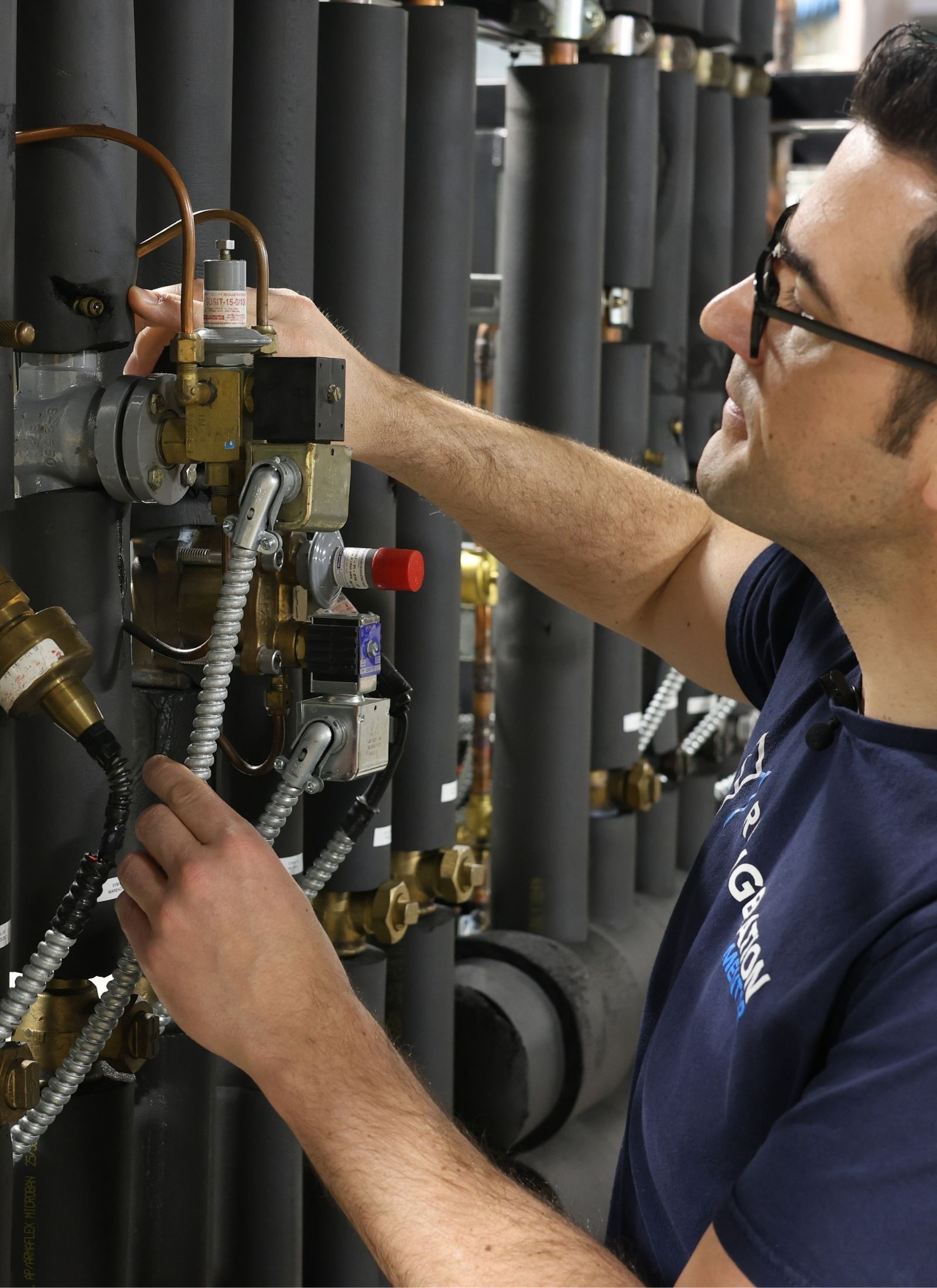
Instructor demonstrating refrigeration techniques to trainees in 2026

WHY REFRIGERATION MENTOR EXISTS

We were journeymen. But when it came to service, we felt like first-years again.

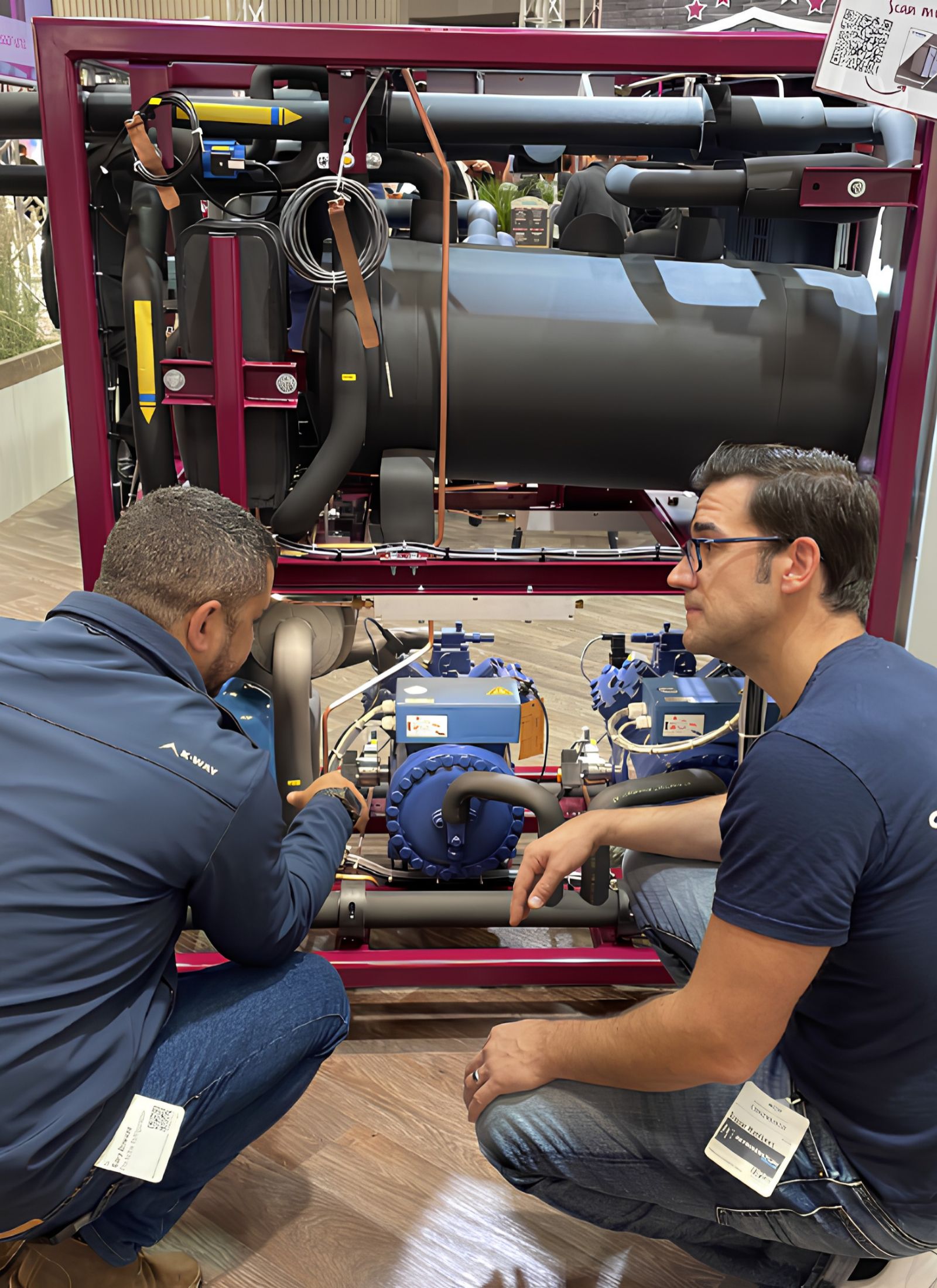
Close-up of a CO2 refrigeration system component with gauges and pipes
I was talking with one of my best friends, Ryan McCarthy, who has been part of this journey with me right from the beginning.
 
We started talking about how we came up in the trade.
There was an old saying we used to hear:
 
“You don’t really start learning until you get your journeyman certificate.”
 
Looking back, that was a pretty terrible way to learn. Ryan and I spent the early part of our careers in construction. We could burn pipe like madmen.
 
We knew how to build refrigeration systems.
Then we became journeymen and moved into service.
Everything changed.
 
Now you’re standing in front of a rack that’s down and the customer wants an answer. You’ve got pressures, temperatures, electrical, controls and a system that isn’t doing what it’s supposed to do.
 
We were getting paid journeyman wages, but when it came to troubleshooting service calls, sometimes we felt like first-years again.
 
And that was stressful.
You’d second-guess yourself.
You’d call somebody with more experience.
 
Sometimes you’d get the system running and leave wondering whether you actually found the problem.
 
We learned because we had to.
 
Service call after service call. Mistake after mistake. Asking questions. Reading manuals. Calling people who knew more than we did.
Eventually the pieces started coming together. But it shouldn’t have to take years of stressful service calls to learn how to think through a refrigeration system.
 
That’s a big part of why I built Refrigeration Mentor.
 
To give technicians the training, education and mentorship I wish Ryan and I had when we made that jump into service.

Sound familiar?

The part is easy to swap. Proving the problem is harder.

We all struggled with intermittent rack alarms, controls that do not seem to agree with the readings and the worry that the fix will not hold.

Close-up of a busted oil filter for refrigeration equipment
Close-up of an oil separator component used in refrigeration systems

01 / THE GHOST CALL

The alarm is gone when you get there.

Oil trips, defrost issues and intermittent faults leave you trying to prove what happened while everything looks normal.

02 / THE CONTROLS LOOP

You keep circling the same readings.

The wiring diagram, sequence and controller feedback do not line up yet. Time keeps moving while the customer waits.

03 / THE CALLBACK

It runs. But is it fixed?

Changing a part without confirming the cause can send the truck back tomorrow or pull the lead tech off another job.

04 / THE PHONE CALL

YOU KNOW WHO YOU’RE ABOUT TO CALL.

You’ve checked the obvious stuff and gone through the controller, but you’re running out of ideas.
So you call the lead tech or service manager again.
There’s nothing wrong with asking for help. But you want to become the technician other people call.

05 / THE FIRST CO₂ CALL

YOU KNOW REFRIGERATION. THIS FEELS DIFFERENT.

Then you walk up to a transcritical CO₂ rack for the first time. Different pressures. Different components. Different controls. Your experience still matters, but now you need to understand a new system while the customer expects answers.

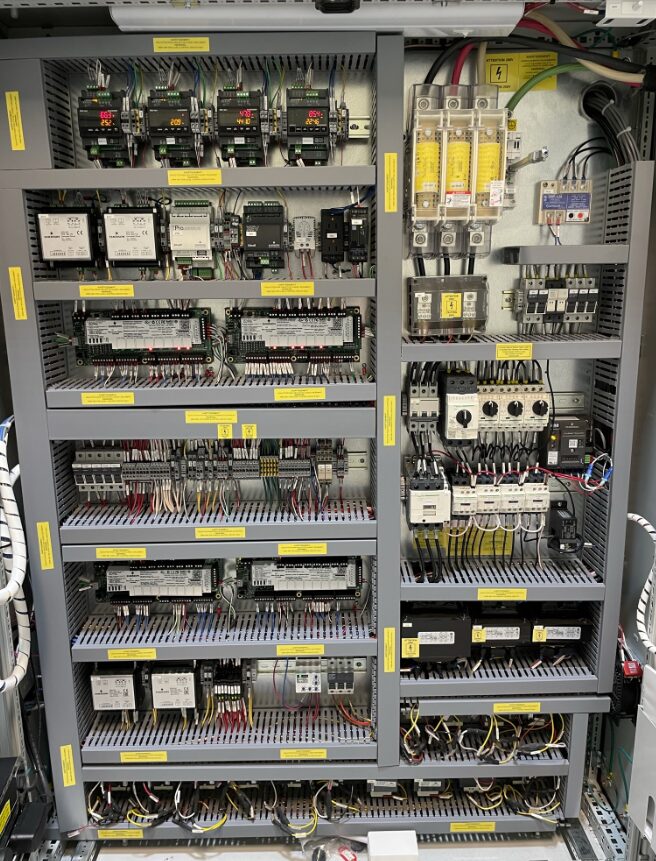
Superheat controller used in refrigeration systems to optimize performance

Stop chasing parts. Follow the system.

The Academy teaches a repeatable way to approach refrigeration troubleshooting. Know what normal operation should look like, test in a useful order and prove what the controls are doing.

01

System: What should be happening?

Understand the equipment and expected operation before you touch a part.

02

Order: What do you prove first?

Use a consistent diagnostic order and the wiring diagram to narrow the fault.

03

Controls: What is commanding it?

Compare the command with the feedback, then verify the cause.

The goal isn’t to never ask for help.

Every good technician asks questions. The goal is to need that call less often.
To walk into the mechanical room, look at the system and have a process.

And when something doesn’t make sense, you know how to keep working the problem.

That’s the technician we’re trying to help you become.

Built by a former tech

Trevor Matthews created the training he wished he had in the field.

1000+ trained

Technicians have learned through Refrigeration Mentor programs.

2x Live weekly

Bring real calls to 90-minute technician training hours.

Inside Refrigeration Mentor Academy

Learn it. Use it on a call. Bring the question back.

Refrigeration Mentor Academy is a training and mentorship program for working technicians. It combines self-paced supermarket and CO₂ refrigeration courses with twice-weekly live sessions where real service calls get discussed.

Core training from day one

Supermarket Academy with more than 100 short technical videos and its workbook, plus CO₂ Academy with more than 10 hours of technical training and troubleshooting content.

Live technician training hours

Two 90-minute sessions every week. Bring the rack, readings, wiring diagram or controller issue you faced in the field.

Replay and keep learning

Work through courses, workbooks and saved Office Hours recordings around your on-call schedule.

Support as skills grow

Private community, live events and ongoing development in controls, compressors, supermarket systems, CO₂ and service strategy

Refrigeration Mentor Academy sign or building in 2026

Refrigeration Mentor Academy might be for you if…

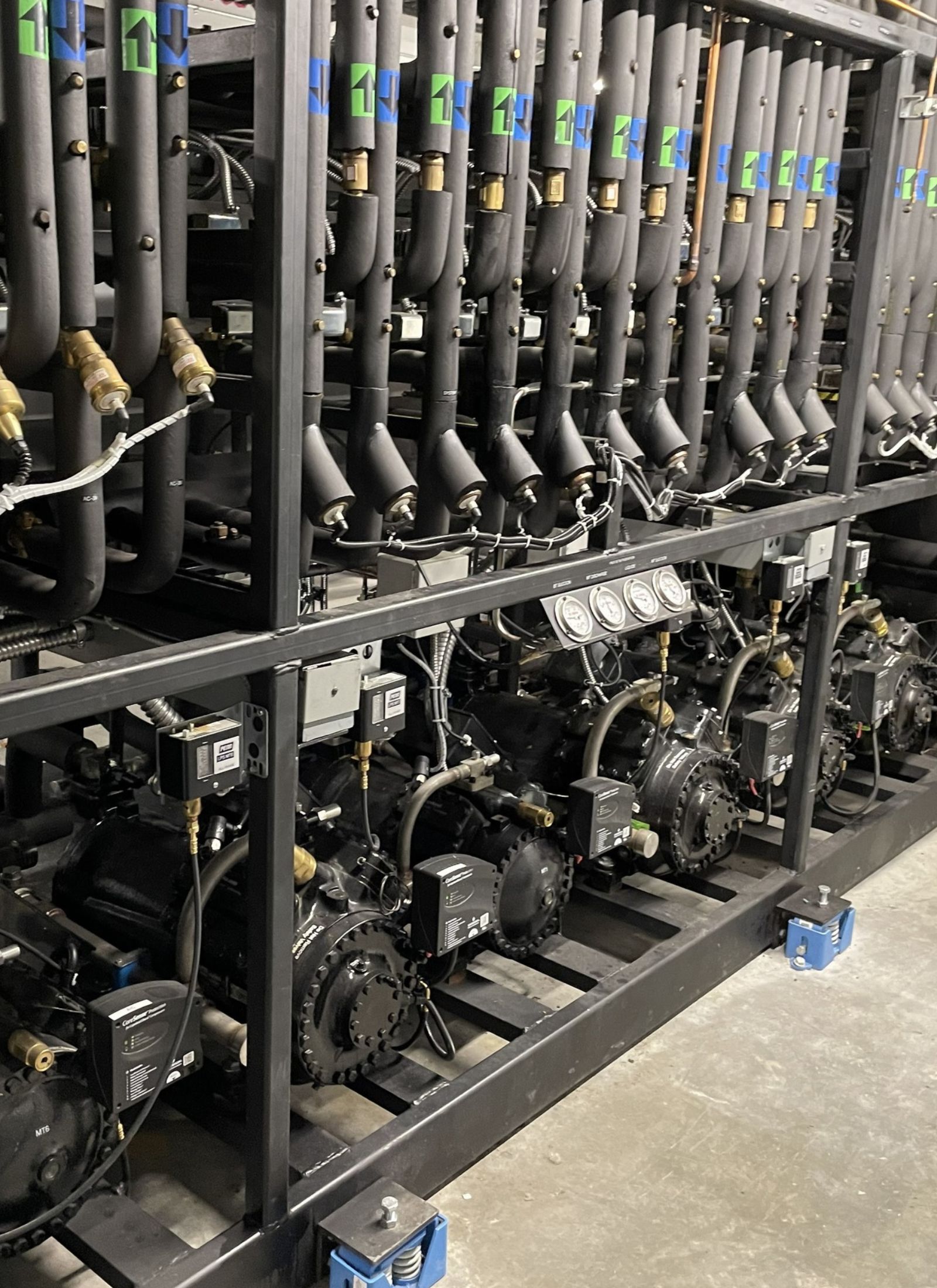
Close-up of a CO2 refrigeration rack system showing pipes and gauges
  • You’re comfortable with some refrigeration systems but still second-guess yourself on harder calls.
  • You’re moving from construction into service and realizing how different troubleshooting is.
  • You’re working supermarket refrigeration and want to understand the entire rack better.
  • CO₂ is starting to show up in your area and you don’t want your first transcritical call to be your first real lesson.
  • You’re tired of calling the same senior technician every time a call gets difficult.
  • You can change parts, but you want to get better at proving why the part failed.
  • You want to become one of the technicians your team trusts with difficult calls.

Tell Trevor where you’re at today.

This isn’t about whether you’re “good enough” for the Academy. Tell Trevor what you’re working on, where you’re getting stuck and where you want to get better. We’ll talk through whether the Academy makes sense for you.

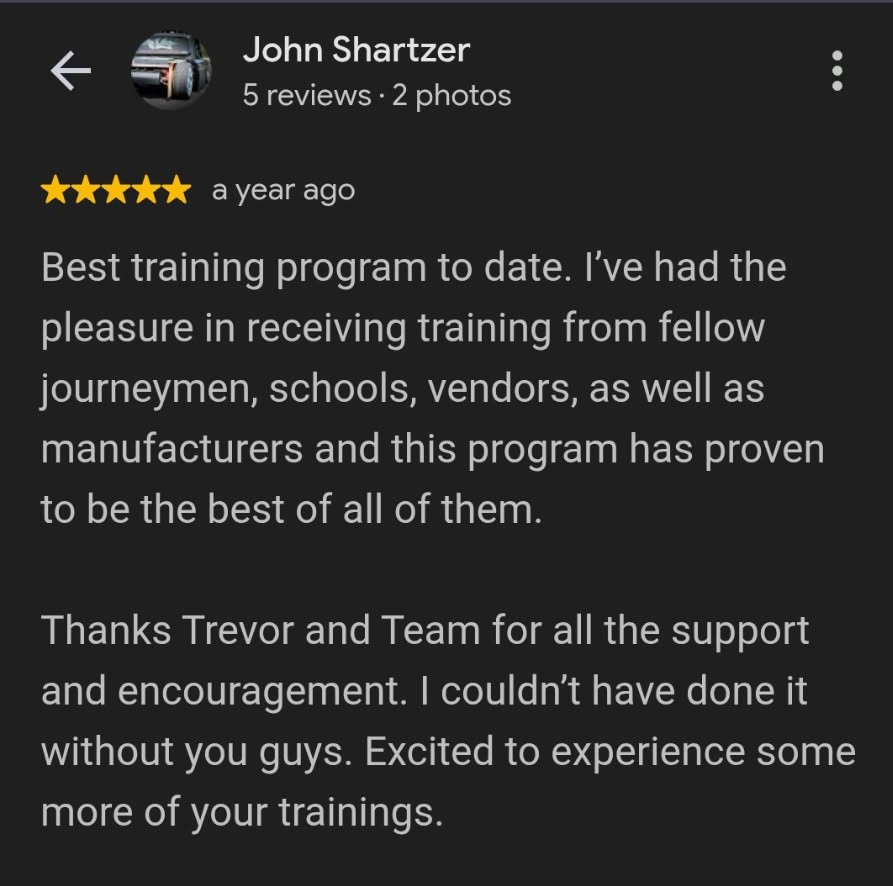
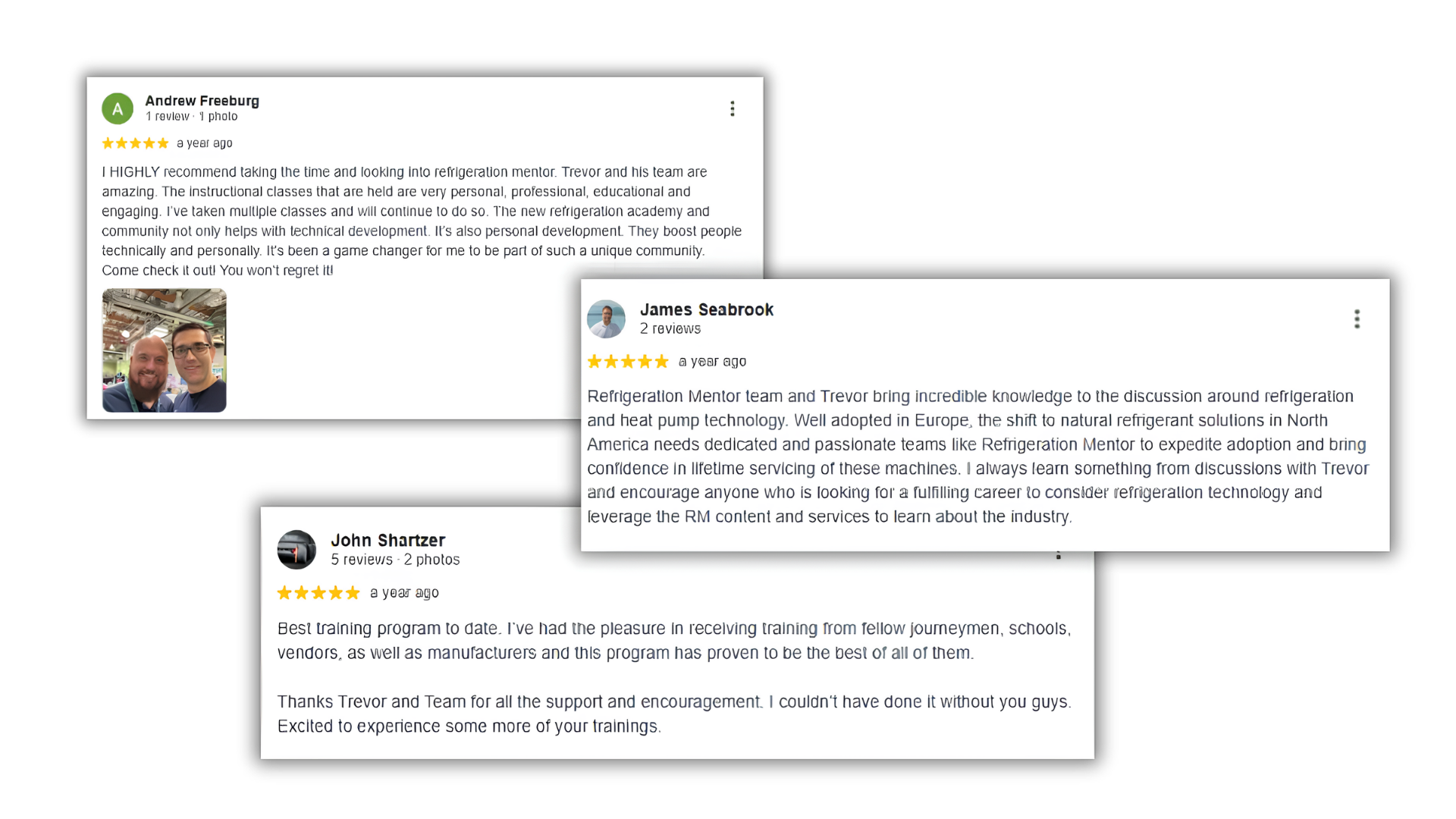
Proof from previous training

What service teams and technicians report.

These are attributed results from Refrigeration Mentor training programs. They are not presented as results from the new Academy.

Logo or promotional image for Refrigeration Mentor Academy 2026
Logo of Refrigeration Mentor Academy 2026
Refrigeration training session at Refrigeration Mentor Academy in 2026
Instructor teaching refrigeration techniques to a group of students in a classroom
Logo of Refrigeration Mentor Academy
Logo for Refrigeration Mentor Academy 2026
Logo of Refrigeration Mentor Academy
Logo of Refrigeration Mentor Academy with blue and white design
Logo of Refrigeration Mentor Academy for 2026
Logo of Refrigeration Mentor Academy representing refrigeration training and education
Group of students attending a refrigeration training session at Refrigeration Mentor Academy in 2026
Instructor demonstrating refrigeration techniques to students in a classroom
Logo of Refrigeration Mentor Academy for 2026
Refrigeration Mentor Academy logo or banner for 2026
Logo of Refrigeration Mentor Academy with blue and gray design
Instructor demonstrating refrigeration techniques to students in a classroom
Logo of Refrigeration Mentor Academy with 2026 date
Logo of Refrigeration Mentor Academy with blue and white design
Logo of Refrigeration Mentor Academy
Logo of Refrigeration Mentor Academy for 2026
Refrigeration Mentor Academy event in 2026
A hands-on refrigeration training session at Refrigeration Mentor Academy in 2026
Screenshot of the Refrigeration Mentor Academy webinar interface in 2026

CHOOSE YOUR PATH

Two ways to get started.

Talk with Trevor about which path fits you or your team best.

option 1

INDIVIDUAL TECHNICIAN

For technicians who want to build stronger troubleshooting skills, become more independent and get better at working through difficult calls.

option 2

TEAM TRAINING

For companies with 10 or more technicians. Talk with Trevor about your team, the type of systems they work on and where they need the most support.

Good questions

Before you decide.

Do I need to be working on CO₂ already?

No. You can build your refrigeration and supermarket foundation now, then use the CO₂ training before that first call comes in.

The courses, workbooks and technician training support hours are available to work through on your schedule. The live technician training hours run twice a week.

Ongoing skill development course cut sheet can be provided for a conversation with your employer.

The live room is built around calls technicians actually had that week: the system, wiring diagram, readings and controls. It is designed to support the work you do in the field.

You’ll go to Refrigeration Mentor’s contact page. Use the form to say you’re interested in the Academy and want a call with Trevor.

Your next difficult call is coming

Get a process you can trust when the easy answer isn’t there.

Tell Trevor what systems you work on, where your calls get stuck and what you want to handle with more confidence.