- On-Demand · Expert-Led
Every CO₂ Callback Starts With Something a Technician Didn't Know. Learn It Before You're Standing in Front of the Rack.
Get instant access to expert-led CO₂ training built around the real service calls technicians face every day, from commissioning and controls to troubleshooting, alarms, oil management, and rack performance.
- Instant Access
- Your Own Pace
- Expert-Led Sessions
- Practical Training

What You'll Get
The Skills You'll Use on Your Very Next CO₂ Service Call
Troubleshoot CO₂ Systems Faster
Stop chasing symptoms and learn how experienced CO₂ technicians identify the root cause before replacing parts or making adjustments.
Reduce Costly Callbacks
Fix problems right the first time by understanding why the system failed, not just what component stopped working.
Read the System With Confidence
Learn how to interpret alarms, pressures, temperatures, trends, and controller data so the system tells you where to look next.
Commission Systems the Right Way
Learn From the World's Leading CO₂ Experts
Get practical training from the technicians, manufacturers, and industry experts who install, commission, troubleshoot, and support CO₂ systems every day.
Understand Controls and Rack Diagnostics
Build confidence working with controllers, rack programming, alarms, and system logic so you can diagnose problems faster and make better decisions in the field.
Two Training Paths
Find the Right CO₂ Training for Your Experience
Two on-demand training paths. Choose the course that matches your current CO₂ experience and build the confidence to take on more challenging service calls.

Option 1 · CO₂ Service Troubleshooting
CO₂ Field Troubleshooting
Perfect for technicians ready to stop guessing and build the confidence to install, commission, troubleshoot, and service CO₂ refrigeration systems.
What You’ll Learn
Develop the skills to read the system, identify problems faster, understand rack operation, avoid common mistakes, and walk into every CO₂ service call with greater confidence.
Includes
- 4 expert-led CO₂ training sessions
- Instant access, watch anytime at your own pace
- Real-world lessons from experienced CO₂ technicians
- Practical training with Sam Major, Erik Holland, Kevin Mullis, and Andrew Freeburg
- Certificate of Completion for Continuing Education Hours
Sessions Included
CO₂ Condensing Units

In this session, Sam Major from Turner Piping breaks down what technicians need to know before servicing and commissioning CO₂ condensing units.
You’ll learn:
✅ Where CO₂ condensing units are used and why they’re growing in popularity
✅ Key differences between condensing units and large transcritical rack systems
✅ Critical piping practices for proper oil return and system performance
✅ Why pressure ratings and proper piping materials matter in CO₂ systems
✅ How voltage issues can impact performance and how to avoid them
✅ Proper evacuation and charging procedures to prevent common mistakes
✅ Safe tool usage and why transcritical-rated gauges are essential
✅ How to troubleshoot issues using system data, alarms, and sound
Whether you’re new to CO₂ or already working with these systems, this session gives you practical, field-ready knowledge you can apply immediately.
Common CO₂ System Mistakes

In this session, Erik Holland breaks down what technicians need to know about CO₂ systems, including how these systems operate, where common issues come from, and how to troubleshoot them more effectively in the field.
You’ll learn:
✅ Why CO₂ is gaining traction as a natural refrigerant and what makes it different
✅ How CO₂ systems operate and why tighter control is critical
✅ Common oil management issues and what causes compressor cutouts
✅ Why thermal expansion and trapped liquid can create dangerous pressure spikes
✅ How dry ice forms and the correct way to charge a CO₂ system
✅ Why gas cooler sensor placement matters for system performance
✅ How to optimize superheat and improve COP the right way
✅ How to troubleshoot unstable pressure and fan control issues
Whether you’re new to CO₂ or already working with these systems, this session gives you practical, field-ready knowledge you can apply immediately.
Reading CO₂ Rack Conditions

In this session, Kevin Mullis dives into how CO₂ systems behave under high ambient conditions, common performance issues technicians face, and how to properly troubleshooting, diagnose and optimize system operation.
You’ll learn:
✅ Why systems struggle during high ambient conditions and what causes it
✅ How incorrect gas cooler pressure settings create excessive flash gas
✅ Why increasing discharge pressure can improve efficiency in transcritical CO₂ systems
✅ How to properly optimize gas cooler pressure and avoid common mistakes
✅ Key oil management faults and how to diagnose them in the field
✅ Safe procedures for servicing high-pressure CO₂ oil systems
✅ How MOP and floating suction conflicts affect case temperatures
✅ A practical diagnostic approach for intermittent system faults
✅ How commissioning decisions can create long-term system conflicts
Whether you’re troubleshooting in the field or optimizing system performance, this session gives you practical insights you can apply immediately.
Avoiding CO₂ Callbacks

In this session, Andrew Freeburg shares practical, field-tested strategies to help technicians avoid costly callbacks during CO₂ system installation, commissioning, and service.
You’ll learn:
✅ Key installation practices that prevent common CO₂ system issues
✅ Proper sensor mounting and insulation to ensure accurate system control
✅ Why verifying controller settings and alarms is critical during startup
✅ How to correctly set up case controllers, MOP, and superheat values
✅ Best practices for commissioning, including tightening connections and testing operations
✅ How defrost schedules and VFD settings impact system performance
✅ Why making one adjustment at a time is critical when fine-tuning systems
✅ Real service examples, including sensor failures and communication issues
If you want to reduce repeat service calls and improve system reliability, this session gives you practical steps you can apply immediately in the field.
One-time price
$147 USD

Option 2 · CO₂ Controls Path
Understanding CO₂ Controls
Perfect for technicians who already have a foundation in CO₂ refrigeration and want to build confidence working with rack controllers, alarms, programming, trends, and advanced system diagnostics.
What You’ll Learn
Develop the skills to troubleshoot controller-related issues with confidence, understand rack programming and system logic, interpret alarms and trend data, and make faster, more accurate decisions on complex CO₂ service calls.
Includes
- 3 expert-led CO₂ training sessions
- Instant on-demand access
- Watch at your own pace
- Practical lessons with Chris Brown, Adam Hughes, and Mike Hill
Sessions Included
Danfoss Controls & Alarm Diagnostics

In this session, Trevor Matthews is joined by Chris Brown from Danfoss to break down CO₂ alarm strategies, controller architecture, troubleshooting logic, and how technicians can diagnose problems faster with more confidence in the field.
You’ll learn:
✅ The most common Danfoss CO₂ alarms technicians encounter in the field
✅ How to understand alarm abbreviations and sensor terminology faster
✅ Why understanding “normal” system pressures is critical for troubleshooting
✅ How booster system design affects alarm behavior in CO₂ systems
✅ Best practices for using the Danfoss Service Tool and connecting to controllers
✅ How to configure COM ports and connect directly to pack controllers
✅ The importance of dead bands, pump-down settings, and neutral zones
✅ How audit trails and parameter logging work inside Danfoss systems
✅ Where to find Danfoss sensor abbreviations and troubleshooting documents
✅ Real-world troubleshooting examples from live technician Q&A
If you work on Danfoss-controlled CO₂ systems, this session will help you understand alarms more clearly, troubleshoot more efficiently, and build confidence when working in the field.
Micro Thermo CO₂ Rack Controllers
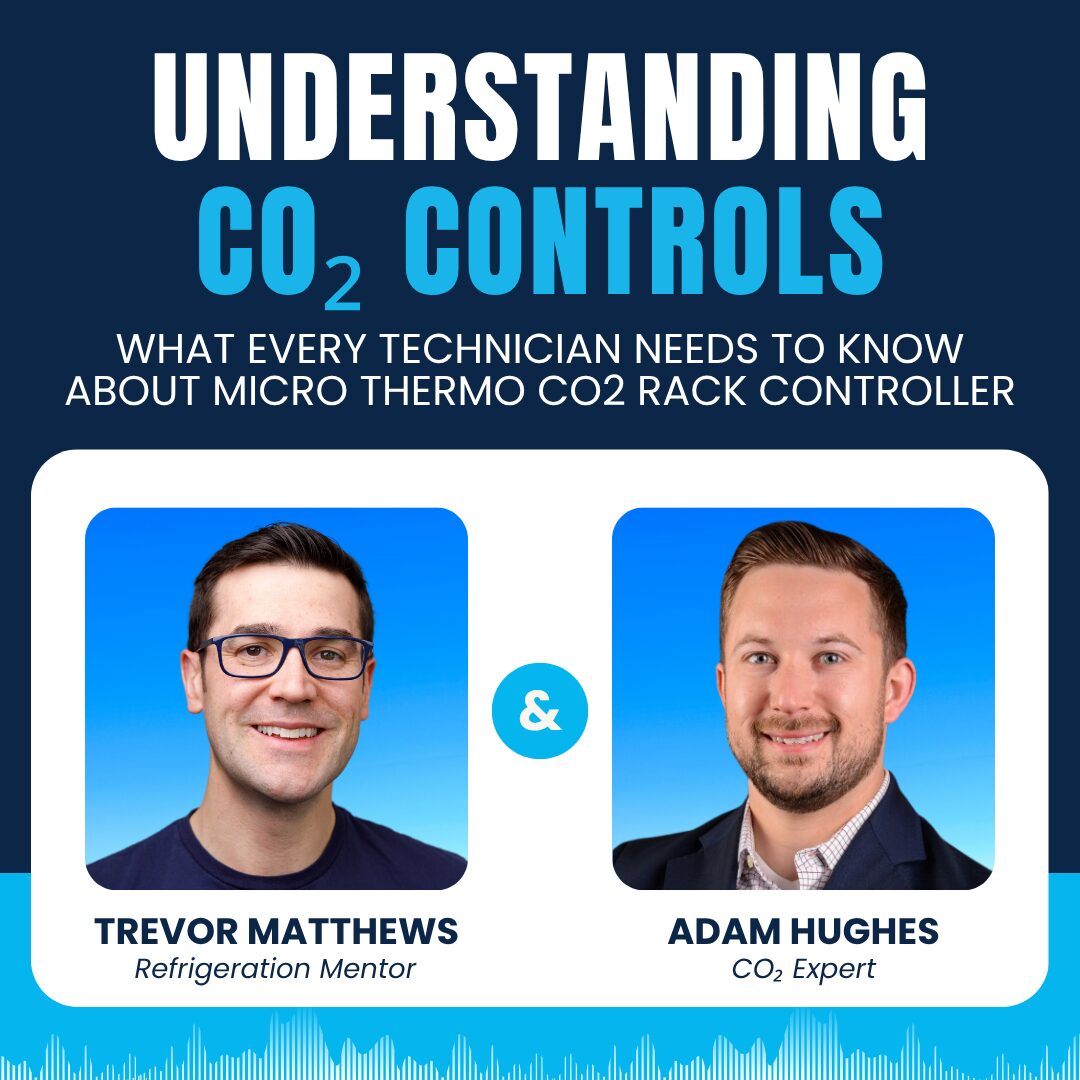
This session features Trevor Matthews and Adam Hughes diving deep into Micro Thermo CO₂ rack controllers, controller navigation, trend graphs, troubleshooting strategies, and how technicians can confidently work through alarms and system issues in the field.
You’ll learn:
✅ How Micro Thermo CO₂ rack controllers have evolved over the years
✅ The difference between overview, maintenance, and configuration permissions
✅ How technicians can safely navigate and troubleshoot Micro Thermo systems
✅ How to use trend graphs and controller data to diagnose issues faster
✅ How to locate sensors, controllers, and components quickly inside Alliance
✅ How “Highlight Connections” helps identify related sensors and controllers
✅ How case controllers manage air temperature and superheat control
✅ Why proper valve setup and trend graph analysis improve system performance
✅ How superheat limits and expansion valve logic work inside the controller
✅ What happens during sensor failures and safety control events
✅ Best practices for login permissions, configuration access, and technician accountability
✅ How CO₂ systems continue evolving with ejectors, heat reclaim, and parallel compression
Whether you’re brand new to Micro Thermo controls or already working on CO₂ systems daily, this session helps break down the controller logic and practical field troubleshooting technicians actually need.
Copeland E3 Rack Programming
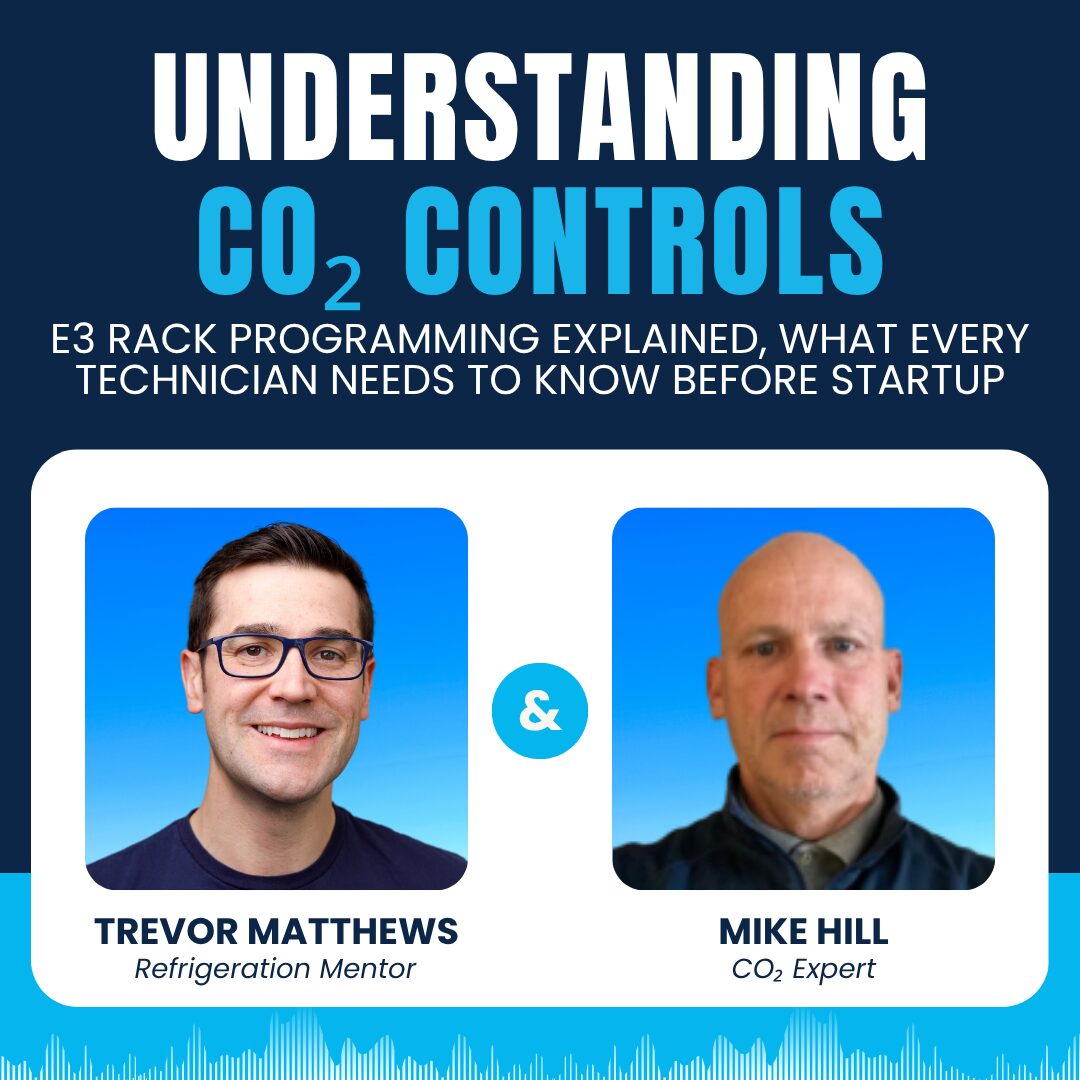
This session, Mike Hill from Copeland walks through the key documents, programming steps, network architecture, controller setup, suction groups, gas cooler control, high pressure valve control, alarms, logging, graphing, and startup best practices that every technician should understand before working on an E3-controlled CO₂ rack.
You’ll learn:
✅ What documents and information are required before programming an E3 controller
✅ How to use store legends, P&IDs, I/O lists, control drawings, and network diagrams
✅ The importance of proper startup and commissioning procedures
✅ Why CO₂ rack startups often require extensive verification and testing
✅ How inputs and outputs are mapped and configured correctly
✅ Common mistakes with transducers, sensors, and control points
✅ Understanding network architecture, Modbus, BACnet, and communication loops
✅ How to troubleshoot addressing, polarity, and termination issues
✅ E3 suction group programming and compressor management fundamentals
✅ Gas cooler control strategies and high pressure valve controller setup
✅ How to properly configure alarms, logging, and graphing functions
✅ Best practices for organizing controller data and naming conventions
✅ Why recommissioning and ongoing maintenance are critical for system performance
✅ Real-world startup and troubleshooting lessons from the field
Whether you’re new to E3 controllers or looking to improve your CO₂ startup and troubleshooting skills, this session provides practical guidance that can help you avoid costly mistakes and improve system reliability.
One-time price
$197 USD
Help Me Choose
Not Sure Where to Start?
-
New to CO₂ or Still Building Your Confidence?
Best if you want to learn:
✔ Installation
✔ Commissioning
✔ Rack operation
✔ Real-world troubleshooting
✔ Build confidence on CO₂ systems
-
Already Working on CO₂ Systems?
Best if you want to learn:
✔ Danfoss controls
✔ Micro Thermo
✔ Copeland E3
✔ Alarms & trend graphs
✔ Advanced diagnostics
Both courses include instant on-demand access, so you can learn at your own pace, revisit lessons anytime, and apply what you learn on your very next service call.
Industry Experts
Learn From CO₂ Industry Experts
These sessions feature practical training from experienced refrigeration professionals, including:
Sam Major
Turner Piping
Erik Holland
Advansor
Kevin Mullis
Clade Engineering Systems
Andrew Freeburg
Key Mechanical
Chris Brown
Danfoss
Adam Hughes
Parker Sporlan
Mike Hill
Copeland
Each session focuses on practical CO₂ system problems technicians face in the field, not theory alone.
FAQ
Everything You Need to Know Before You Enroll
Is This Course Right for Me if I'm New to CO₂?
Yes. If you’re new to CO₂ refrigeration or want to build a stronger foundation, CO₂ Field Troubleshooting is the best place to start. You’ll learn installation, commissioning, rack operation, troubleshooting, and the practical skills you need to service CO₂ systems with greater confidence.
I've Already Worked on CO₂ Systems. Is This Training Still Worth It?
Absolutely. These courses go beyond the basics and focus on the real challenges technicians face in the field. Whether you want to improve troubleshooting, understand rack performance, master controllers, or sharpen your diagnostic skills, you’ll gain practical knowledge you can apply on your very next service call.
What Makes CO₂ Unfiltered Different From Other Online Training?
CO₂ Unfiltered brings together experienced technicians, manufacturers, and industry experts to share practical lessons based on real installations, commissioning, troubleshooting, controls, and field experience. Every session is designed to help you understand how CO₂ systems work, so you can think through problems with confidence instead of relying on guesswork.
Will This Training Help Me Reduce Callbacks?
The goal of this training is to help you understand the system, identify problems more accurately, and make better troubleshooting decisions. As your confidence and diagnostic skills improve, you’ll be better equipped to avoid common mistakes that often lead to repeat service calls.
Is This Theory or Practical Field Training?
This is practical, real-world training built around the situations technicians face every day. Every lesson focuses on installation, commissioning, troubleshooting, controls, rack performance, and field diagnostics that you can apply on your next CO₂ service call.
Who Will I Be Learning From?
You’ll learn directly from experienced CO₂ technicians, manufacturers, and industry experts who install, commission, troubleshoot, program, and support CO₂ refrigeration systems every day. Every session is based on real field experience, not just classroom theory.
How long do I have access?
You’ll receive instant, on-demand access as soon as you enroll. Learn at your own pace and revisit the lessons whenever you need a refresher before an installation, startup, or service call.
Can I Rewatch the Training Anytime?
Yes. Watch every lesson as many times as you need. Whether you’re preparing for a commissioning job, troubleshooting a difficult issue, or reviewing a concept months later, your training is always available when you need it.
Can My Company Enroll Multiple Technicians?
Yes. Many refrigeration contractors use CO₂ Unfiltered to help their teams build confidence faster, improve troubleshooting consistency, and strengthen their CO₂ knowledge across the business. If you’re looking to train multiple technicians, contact us for team training options.
What if I'm Not Sure Which Course to Start With?
If you’re newer to CO₂ refrigeration or want to strengthen your foundation, start with CO₂ Field Troubleshooting. If you’re already working on CO₂ systems and want to improve your understanding of controllers, alarms, rack programming, trend data, and advanced diagnostics, Understanding CO₂ Controls is the next step. No matter which course you choose, you’ll gain practical knowledge you can apply immediately on real CO₂ service calls.
Get Started
Ready to Build Practical CO₂ Skills?
Choose your CO2 Unfiltered training path and start learning today.